Date visited: 25 January 2021
Elevation: 80m
Volcanic history
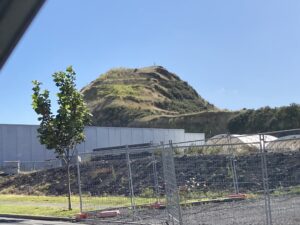
Matukutūruru is a volcano located in Wiri. It once had a scoria cone that reached 80 meters above sea level, which was approximately 50 meters higher than the surrounding land. The maunga was also the site of a pā. The mountain is part of the Matukurua lava field, which also includes nearby Matukutūreia (McLaughlin’s Mountain).
The lava flows from the eruption of Matukutūruru created the Wiri Lava Cave. This fascinating geological feature is a 290-meter-long lava tube, which is a type of cave formed when the surface of a lava flow cools and solidifies, while the molten lava inside continues to flow, eventually draining out, leaving a hollow tube. I believe this is the longest known lava cave in the Auckland volcanic Field, but I imagine there are others yet to be discovered.
The Wiri Lava Cave is unfortunately (but understandably) closed to the public, although Auckland Uni Volcanologist Elaine Smid has a wonderful photo tour of the cave on her blog, City of Volcanoes, from when a few lucky earth science people were allowed to go inside.
This maunga, like Ōhuiarangi and Ōtāhuhu, is one of the 14 Ancestral Mountains of Auckland, or Ngā Tūpuna Maunga o Tāmaki Makaurau. In 2014, the ownership of Matukutūruru was returned to mana whenua as part of a Te Tiriti o Waitangi redress and is currently managed by the Tūpuna Maunga Authority. You can find a list of all tūpuna maunga on the Auckland City Council website.
Our visit
After two box-checking visits this day (to Matukutūreia and Ash Hill), the kids were beyond excited to actually get out of the car and go on a trek.
This maunga is located on the corner of Roscommon and Wiri Station Roads, so it is very busy and there is no official parking for visitors (at least that I could find). There was a small gravel driveway which is gated off, and we were able to find a little patch to park off to the left here. The only other car there was an Auckland City Council vehicle.
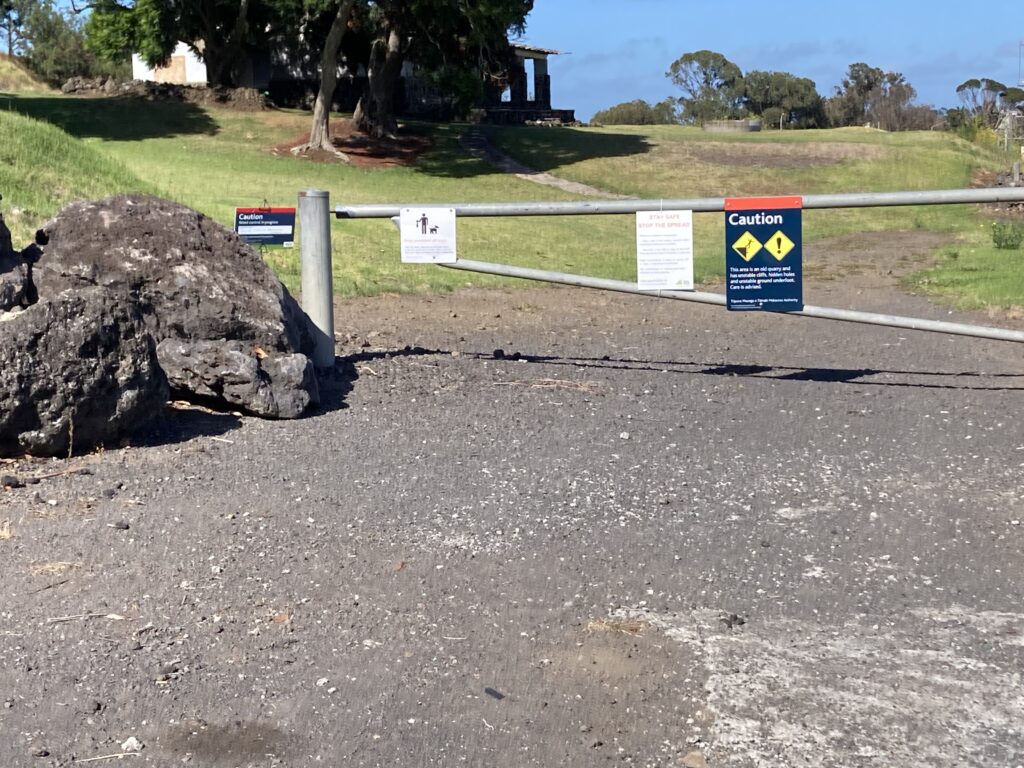
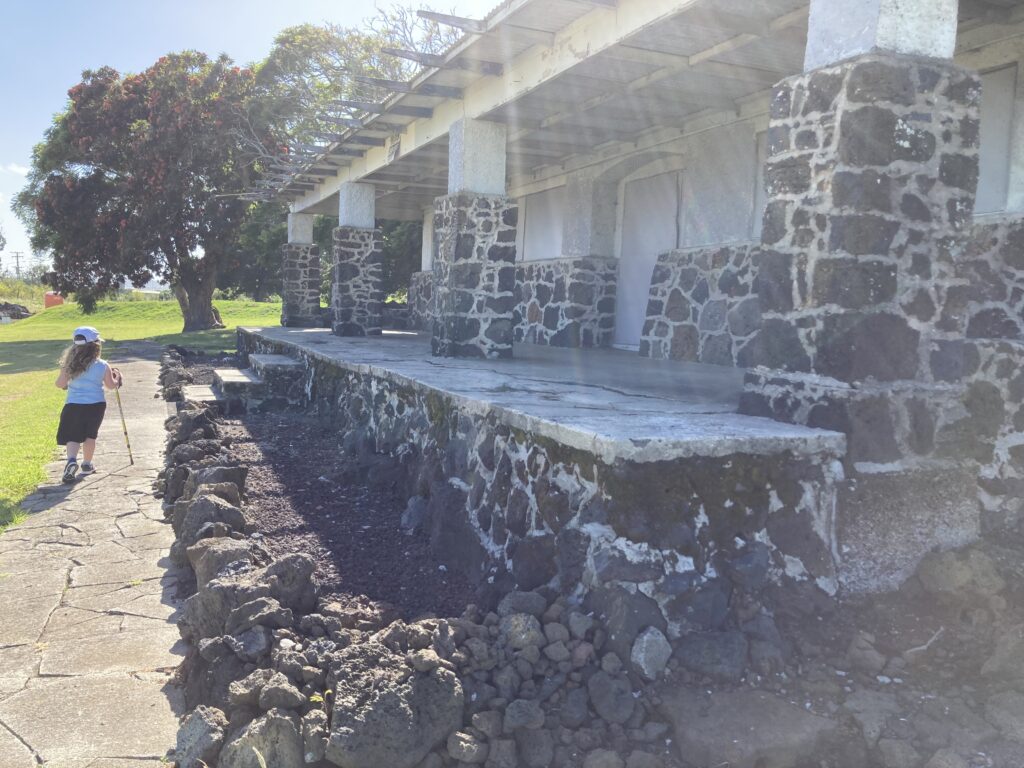
Walking up the path, this boarded-up stone building was the first thing that caught our attention. It is, or was, called Jacaranda Cottage and was built in 1928. I am informed by a friend who once lived in the area that in more contemporary times, it was a cafe.
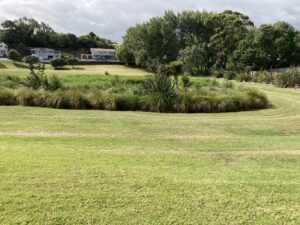
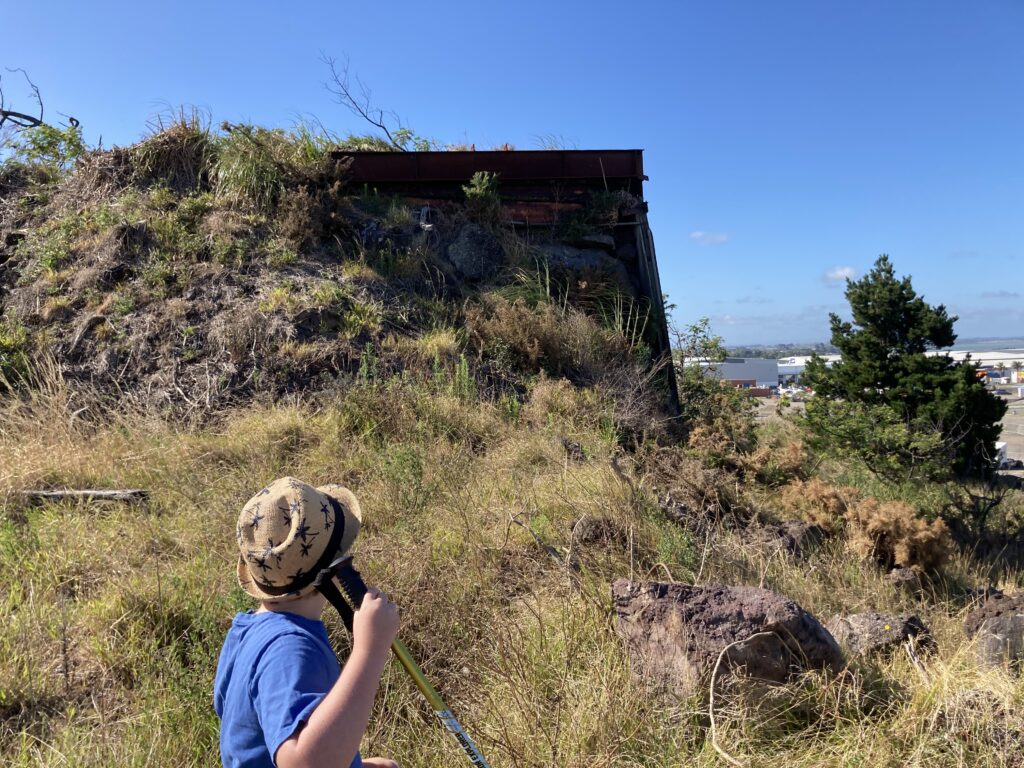
I feel, but am not certain, that this odd structure is possibly entrance to the Wiri Lave Cave. It’s clearly manmade and doesn’t seem to serve any other purpose than to block something off, so that is my guess.
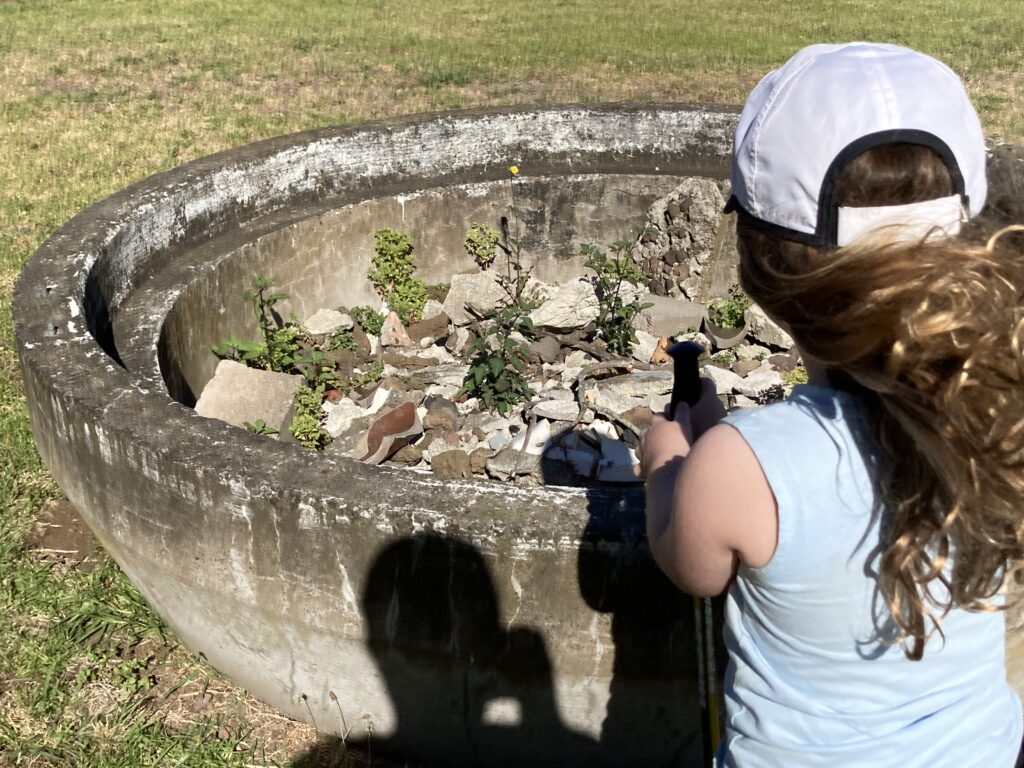
I have no idea what this concrete structure is. At first glance it appeared to be a water trough for animals, but on closer inspection, you will note it’s quite pipe-shaped. Could it be a huge pipe sticking up out of the ground? Could it be connected somehow with the lava caves, maybe for the release of methane to prevent underground explosions? I don’t know, but it was filled with rubble. Mysterious.
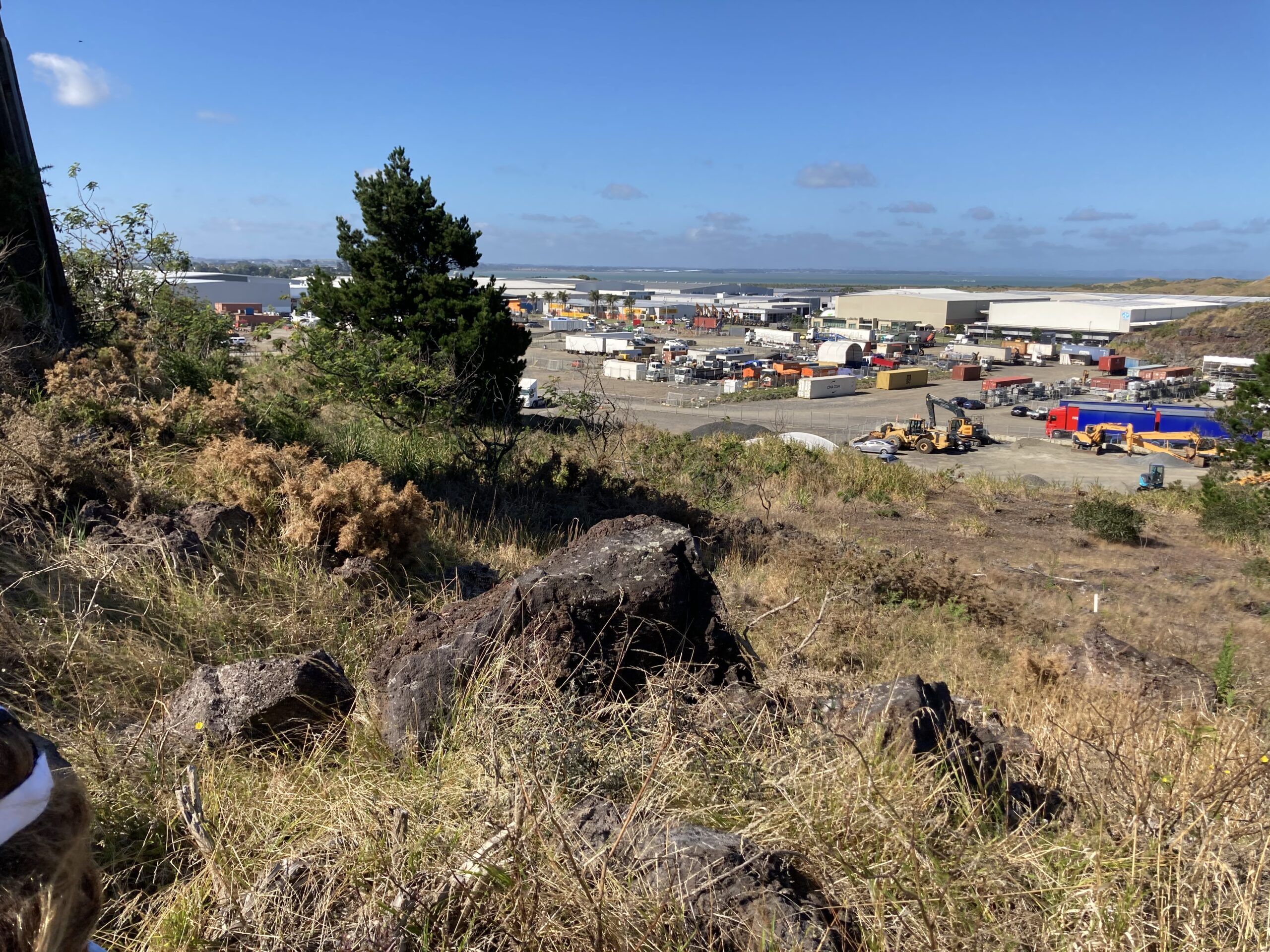
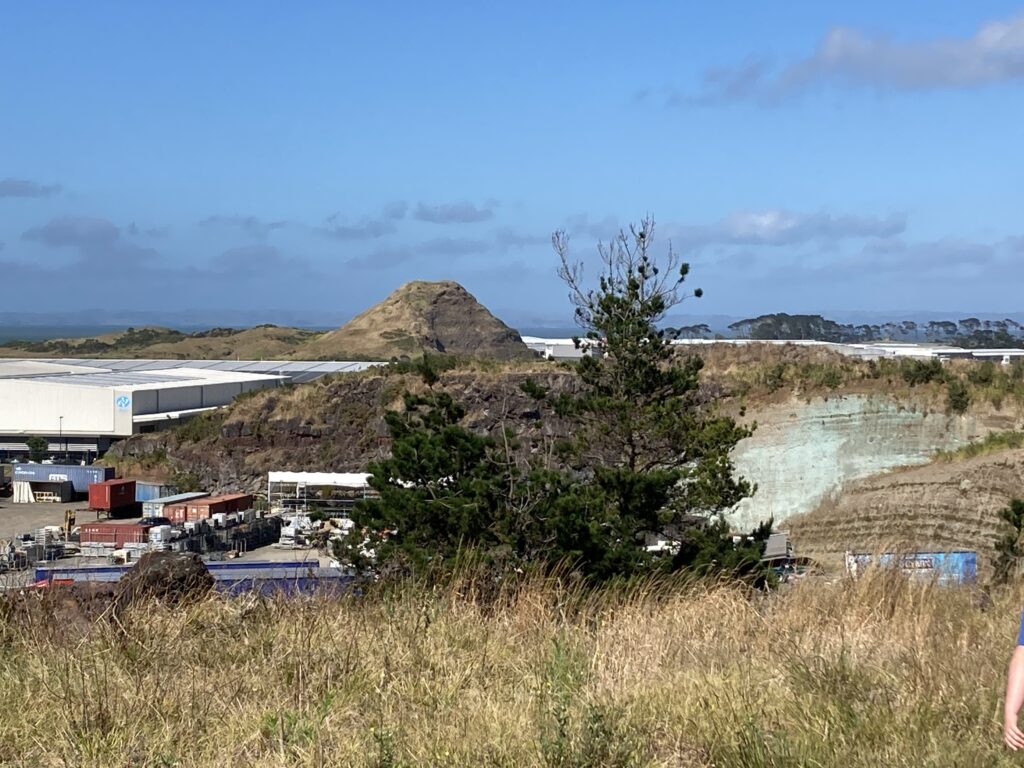
The top of this maunga was quite flattish and afforded a view over the industrial area of Wiri and beyond. It was hard to discern which part of the maunga was the tihi, but this appeared to be the highest point.
Directions and facilities
Put 244 Wiri Station Road into the GPS. There are no facilities to speak of, and no parking unless you happen to come on a day when there is no one else here. There is a very small gravel area by the driveway, which was where we parked on this day. Wiri Station Road isn’t yellow lines, but it’s so busy that I wouldn’t park on it. Exercise extreme caution if visiting with children.
Happy adventuring,